
Early Treatment: When Timing Genuinely Changes the Outcome
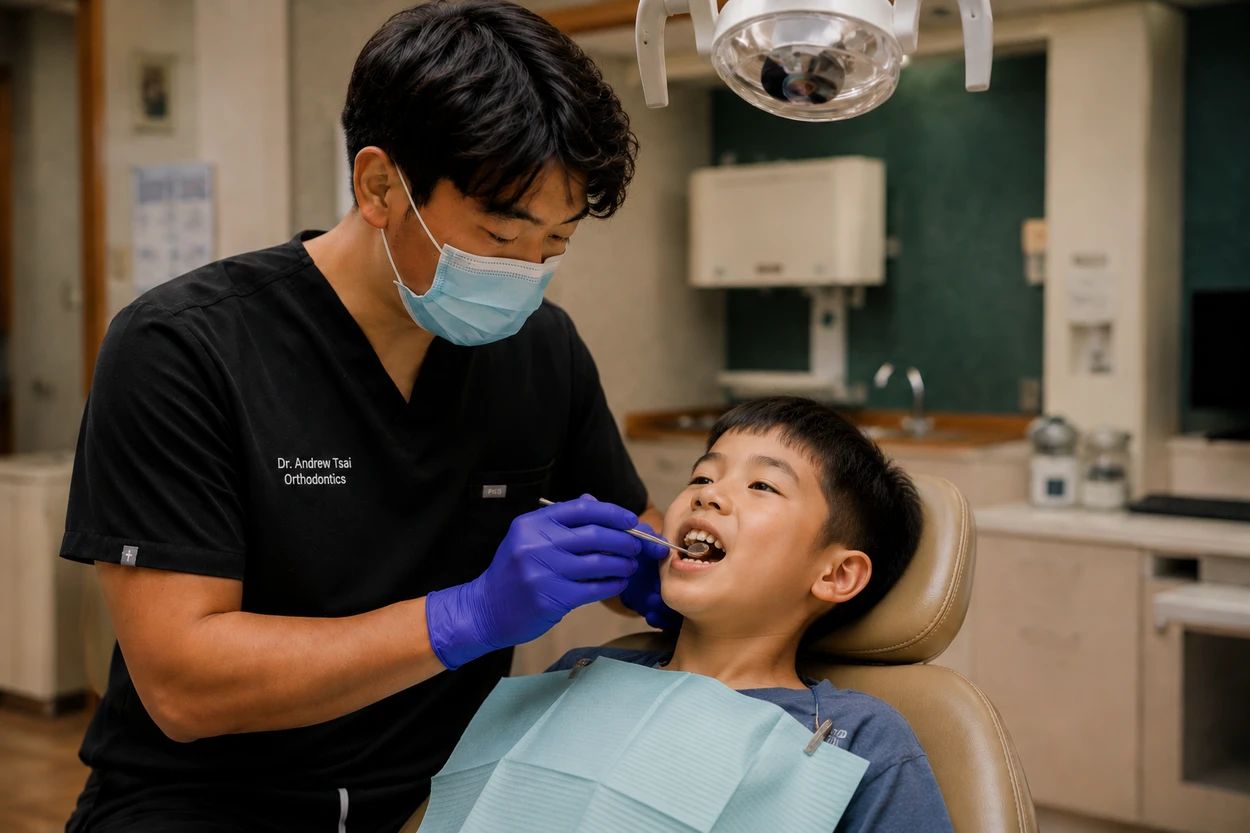
Phase I Treatment is early orthodontic treatment for children who still have most of their baby teeth, usually between ages eight and eleven. It exists for a specific reason: a small number of developing problems are far easier to correct while a child is still growing, and waiting until all the adult teeth arrive can mean a harder, longer, more invasive fix later. Phase I is not for every child, and we'd rather talk a family out of unnecessary early treatment than into it.
In the right case, treating early takes advantage of growth you can't get back: guiding the jaw as it develops, making room for adult teeth, and correcting issues that would only entrench with time. The aim is to steer development toward a better outcome, not to do all the orthodontics now.
Phase I may help when a child has:
- A crossbite, especially one causing the jaw to shift to one side
- A significantly narrow upper jaw
- Severe crowding with no room for adult teeth to come in
- Protruding upper front teeth at higher risk of injury
- Persistent thumb-sucking affecting the bite, or an early underbite
When a child is a candidate, Phase I usually involves a focused course with a specific appliance , an expander, partial braces, a habit appliance, or some combination of the above. Treatment typically runs for about a year. Once it's complete, your child enters the supervision phase: we monitor growth and the eruption of the adult teeth at regular six-month to one-year intervals, with no active appliances, until the timing is right for the next stage.
Phase I sets up Phase II. It doesn't replace it
This is the part worth being clear about: most Phase I cases still require Phase II, the comprehensive treatment that aligns the full set of adult teeth once they're all in. Phase I isn't meant to finish the job. Its goal is narrower and more important, to address jaw discrepancies or critical issues at the moment they can actually be influenced, and in doing so to lower the chance of longer treatment, extractions, or more invasive procedures later in life. Done at the right time, it makes the treatment that follows shorter and simpler.
Wondering whether early treatment is right for your child?
Children & Teens
Orthodontic care timed around a child or teen's natural growth.
Explore Children's OrthodonticsAirway Friendly Orthodontics
Orthodontic planning that considers growth, facial structure, and airway development.
Explore Airway Friendly CareMARPE / TADs
Miniscrew-assisted rapid palatal expansion, supported by TADs, for carefully selected cases.
Explore MARPE / TADs